Joshua Lieser
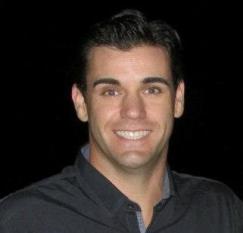
Professor of History
LS-L
Education
2014 - PhD, History - UC Riverside
2008 - MA, History - Cal Poly, San Luis Obispo
2001 - Single Subject Teaching Credential in Social Studies, Cal Poly, San Luis Obispo
2000 - BA, History - Cal Poly, San Luis Obispo
About
Dr. Joshua Lieser came to Oxnard College in 2014 after completing his PhD in History at U.C. Riverside. He has previously taught as an adjunct faculty member at U.C. Riverside, CSU Channel Islands, MiraCosta College, Mesa College, and Crafton Hills College. His dissertation, entitled “Cultural Constructs, Corporate Sponsorship, & the Cold War: the 1984 Los Angeles Olympics,” is a reconsideration of the Cultural Cold War through the soft power expression of sports. His areas of academic expertise include American History, American Sports History, U.S. Foreign Policy, World History, and Russian History.
Prior to completing his PhD, Dr. Lieser completed his MA in History in 2008, a Single Subject Teaching Credential in 2001, and his BA in History in 2000 - all at Cal Poly, San Luis Obispo. In addition to prior experience teaching at a number of colleges and universities, Dr. Lieser was a high school social studies teacher and men's basketball coach for seven years prior to seeking his PhD. As a result, Dr. Lieser is especially interested in working with students who want to become teachers.
Publications
Dr. Joshua Lieser, “Cultural Constructs, Corporate Sponsorship, & the Cold War: the 1984 Los Angeles Olympics,” University of California, Riverside, December 2014
Dr. Joshua Lieser, "Book Review - James Carter and Richard Warren, Forging the Modern World: A History," World History Connected, Volume 13, Number 3, October 2016
Dr. Joshua Lieser, "Book Review - Pan Asian Sports and the Emergence of Modern Asia, 1913-1974," Journal of Sport History (2017) 44(3): 510-511
Awards
2013 - MiraCosta College Associate Faculty of the Year
2012 - UC Riverside Teaching Assistant of the Year
2007 - Paso Robles High School Teacher of the Year
jlieser
Gary Johnson
gjohnson
Travis King
travis_king2
Nathan Lopez
nlopez
Walt Agajanian
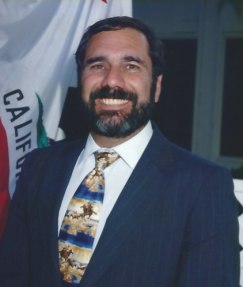
Adjunct Professor, History
Virtual
Education
BS Liberal Studies - SUNY
BA History - CSUN
MA History - CSUN
About
After many years in business, Professor Walt Agajanian began a second career as an instructor of History, arriving at Ventura College in 2016. Because of his wide range of life experiences, Professor Agajanian has taught almost every course offered in the History Department at Ventura College. Professor Agajanian has been active in many different student clubs and associations, as an advisor, and has served on multiple committees, including the Diversity in Culture Task Force, and Ventura College History Association. He has given a wide range of presentations both at college events and with public organizations and museums. Professor Agajanian can be found teaching History courses at the main campus, at the Santa Paula East Campus, and Online via Canvas.
walter_agajanian1
Colleen Coffey
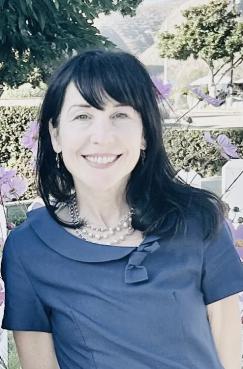
Professor of History
LRC-303
Monday: 9:00 am-10:00 am, Tuesday: 9:00 am-11:00 am, Thursday: 9:00 am-11:00 am
Education
AA-Ventura College
BA-University of California, Santa Barbara
MA-University of California, Santa Barbara
About
What is that saying? Find a job you love and you'll never work again. Suffice it to say, I never have to work again.
When I am not teaching my college students, I am hiking, gardening, camping, and homeschooling with my wild and wonderful 12-year-old son.
ccoffey
P. Scott Corbett
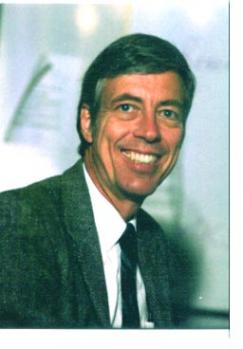
Instructor
Education
Ph.D
About
Let me begin by saying that I do not have a “teaching philosophy” so much as a learning philosophy. Experience and years in the classroom has led me to believe that the deepest and most significant learning students can achieve is that which they find within themselves, create for themselves, and cherish in themselves. Hence, I strive to be a coordinator of curriculum – i.e. helping to determine what ideas, concepts and lessons students ought to work through. From there I try to set the table for them and then encourage and coach them through the process of tasting all the material and learning how to critically analyze the material, determine the truth or the near truths, and then decide how to incorporate that learning into their professional and personal evolution.
With regards to this particular position of serving as an Adjunct Faculty member in Fairleigh Dickenson University’s International Summer Program in China teaching American history I believe my primary function would be to be an instructional and intellectual bridge between civilizations, understandings of historical and national developmental process and the interpersonal community building among a mix of American and Chinese students. Having taught American history in China, Singapore as well as in the United States, I am familiar with the aspects of American history that Chinese and American students find interesting and mystifying. For Chinese students, I have learned to call upon my own academic preparation and experience teaching Chinese history to find examples, analogies and explanations of elements of American and western civilization that employ logic and human understandings that are familiar and approachable through their cultural and world views. Conversely, through years of seeking to interpret Chinese history and civilization to American students, I have developed a toolkit of how to make the Asian world explicable and comprehensible to American students. Admittedly, doing so would not be a primary function of the position but in-as-much as I could enhance the experience of the American students studying American history in China by helping them adjust and connect to their surroundings, their classmates, and their intellectual growth, that would be a genuine benefit and bonus for them. To help both American and Chinese students to be better able to critically analyze their collective historical legacies and their personal versions of the human condition in the midst of experientially obvious alternatives would be my greatest goal in servicing the purpose and potentialities of the program.
Years ago, as an undergraduate, I had a really nice landlady who was slightly hard of hearing. When I first introduced myself to her as “Scott” she heard “Scout”. Hence, she always addressed me as “Scout” and to some degree I think that might sum up the role I have been trying to play in higher education for decades. I try to scout out pathways to better understandings. I then try to get the students to join me on the journey to those meadows of mindfulness. While we are all there, I encourage the students to note their surroundings and the beauties and possibilities we have mutually discovered.
Publications
BOOKS AUTHORED
Quiet Passages: The Exchange of Civilians Between the United States and Japan During the Second World War, Kent State University Press, 1987.
BOOKS, EDITED:
P. Scott Corbett, Cognitive Civilizations: The Weaving of Our Verbal Homes: World History II, Cognella Custom, 2019.
P. Scott Corbett, with Volker Janssen, John M. Lund, Todd Pfannestiel, and Paul Vickery, US History, OpenStax, [https://openstax.org/details/books/us-history], 2016, ISBN-13 978-1-938168-36-9.
P. Scott Corbett and Ronald C. Naugle, Life, Liberty, and the Pursuit of Happiness: Documents in American History, Volume I, McGraw Hill, 2004.
P. Scott Corbett and Ronald C. Naugle, Life, Liberty, and the Pursuit of Happiness: Documents in American History, Volume II, McGraw Hill, 2004.
Felix B. Tan, P. Scott Corbett, Yuk Yong Wong, eds., Information Technology Diffusion in the Asia Pacific: Perspectives on Policy, Electronic Commerce and Education, Idea Group Publishing, 1999.
Quiet Passages: The Exchange of Civilians Between the United States and Japan During the Second World War, Kent State University Press, 1987.
BOOKS, EDITED:
P. Scott Corbett, Cognitive Civilizations: The Weaving of Our Verbal Homes: World History II, Cognella Custom, 2019.
P. Scott Corbett, with Volker Janssen, John M. Lund, Todd Pfannestiel, and Paul Vickery, US History, OpenStax, [https://openstax.org/details/books/us-history], 2016, ISBN-13 978-1-938168-36-9.
P. Scott Corbett and Ronald C. Naugle, Life, Liberty, and the Pursuit of Happiness: Documents in American History, Volume I, McGraw Hill, 2004.
P. Scott Corbett and Ronald C. Naugle, Life, Liberty, and the Pursuit of Happiness: Documents in American History, Volume II, McGraw Hill, 2004.
Felix B. Tan, P. Scott Corbett, Yuk Yong Wong, eds., Information Technology Diffusion in the Asia Pacific: Perspectives on Policy, Electronic Commerce and Education, Idea Group Publishing, 1999.
Awards
NEH Summer Seminar: George Washington University, 2014
Chancellor’s Award for Excellence, Ventura County Community College District, 2010.
Great Teacher’s Seminar Participant, 2006.
Zhejiang Province, China, Meritorious Service Award, 2005.
NEH Summer Faculty Fellowship, The Johns Hopkins University, 1991.
NEH Summer Institute, University of Wisconsin, 1989.
Outstanding Teaching Award, Beijing Foreign Studies University, 1988.
NEH Summer Faculty Fellowship, Columbia University, 1985.
Chancellor’s Award for Excellence, Ventura County Community College District, 2010.
Great Teacher’s Seminar Participant, 2006.
Zhejiang Province, China, Meritorious Service Award, 2005.
NEH Summer Faculty Fellowship, The Johns Hopkins University, 1991.
NEH Summer Institute, University of Wisconsin, 1989.
Outstanding Teaching Award, Beijing Foreign Studies University, 1988.
NEH Summer Faculty Fellowship, Columbia University, 1985.
scorbett